Hand on a company, not a set of habits.
French family groups carry continuity, loyalty and a long view that institutions cannot buy. The missing piece is usually structure, so that the next generation takes over a company that does not depend on the one before being present.
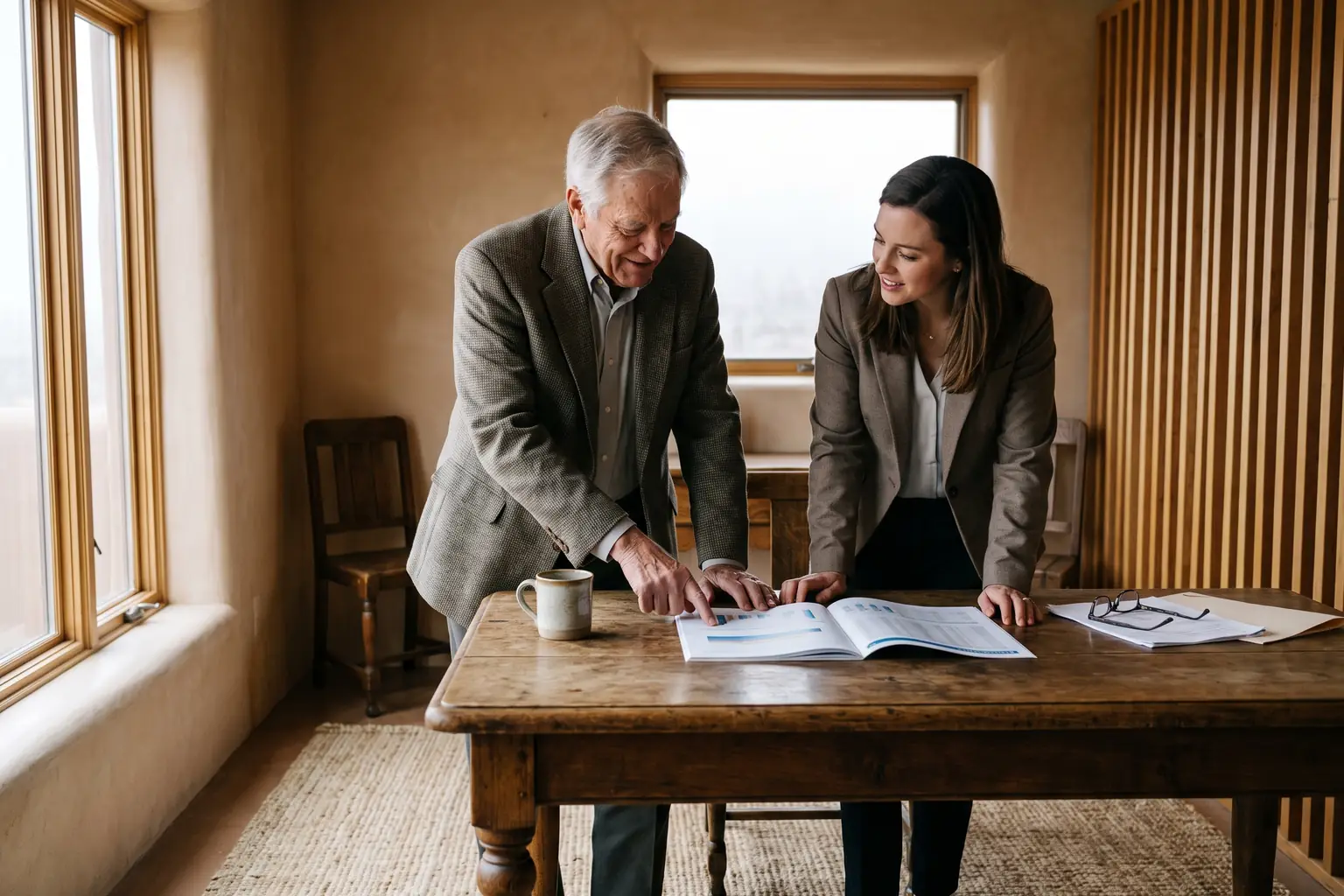
What makes a family group seek outside help
The trigger tends to arrive with a generation change:
A transmission with no structure under it
The family has thought about the tax side of handing on. Nobody has asked who will run the company the day after.
Family and management share a table
That holds until a decision has to be purely commercial and no one is able to separate the two.
Lenders and buyers ask for governance
A bank, a minority investor or a buyer asks for a board, a reporting cadence and an owners' agreement that the family has never had to produce.
Nobody is free to disagree
Everyone senior got their post through the family, so genuine challenge rarely surfaces.
A fractional executive comes from outside, with no part in the family's history and no career to defend. They bring order, voice what others cannot, and leave the family's authority stronger, not weaker. When a permanent hire is the right answer, they help you find that person and hand the work over.
Who this is for, and who it is not
Best for
- Owner-led and family-owned businesses at a succession or handover moment
- Next-generation leaders with the appetite but not yet the operating experience
- Businesses whose reporting and governance have outgrown how decisions get made
- Families adding non-family managers who need clear, well-defined authority
- Principals who want structure built without ceding permanent control
Not for
- Families seeking to hand the business permanently to an outside executive
- A purely advisory brief with no operating work attached
- Situations where the family is not ready to let an operator inside the business
- A single project a specialist contractor could deliver and leave

Why families bring us in
A family needs someone it can trust and who answers to the company, not to one branch of the family.
Chosen for the family's situation
We spend time on the family as well as the business before searching, because temperament weighs as much as skill here.
Peers for the hard calls
When a question about succession turns out to be about governance, a peer who has handled both is a call away.
Continuity held by us
We keep the brief and the notes from every review, so a change of executive is a handover the family does not have to manage.
Discreet by temperament
Family boards discuss things they would never put in writing. We match for people who can be trusted with that.
Every stage is built around the family
The stakes are relational as well as commercial, so the engagement is designed to protect both.
Discovery includes the family
We understand not just the business but the family's goals, values, and sensitivities. What must be protected throughout the engagement?
Culturally weighted matching
For family businesses, the right personality, communication style, and cultural awareness matter enormously. We take more time on matching than in any other engagement type.
Framing the engagement
How the fractional role is introduced to the team, including family members, is part of our process. We help frame it in a way that builds confidence.
Regular three-way check-ins
Active Fractional France presence throughout, not just at the start of the engagement. We check in with both the client and the fractional executive.
Common transition moments
A fractional operator is most valuable where the way the business has always run stops fitting what it needs next.
Each fractional role solves a different problem
The right role depends on where the gap is: operations, finance, growth, people or technology.




Trusted by the region's leading family groups